Otoplasty Before & Afters
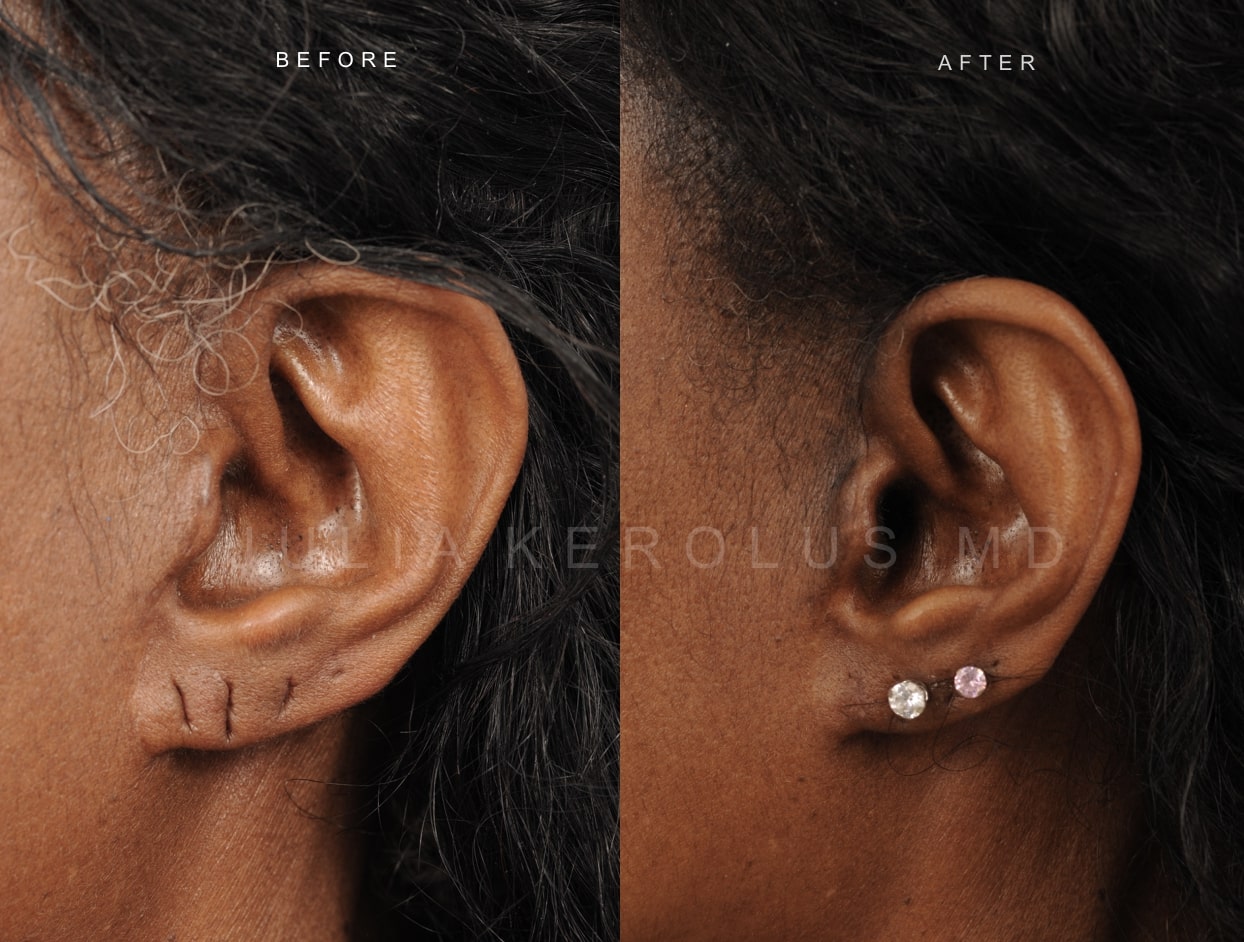
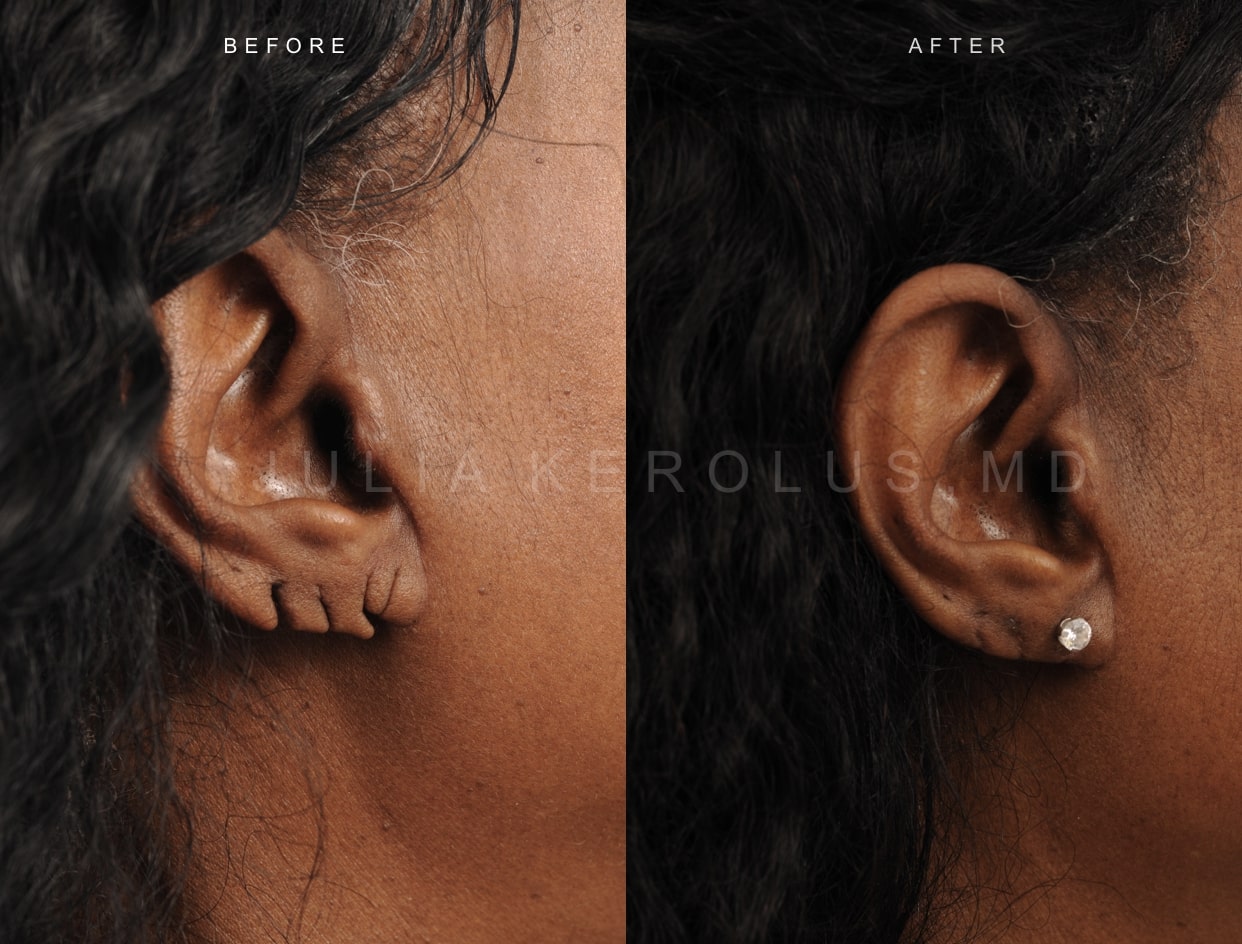
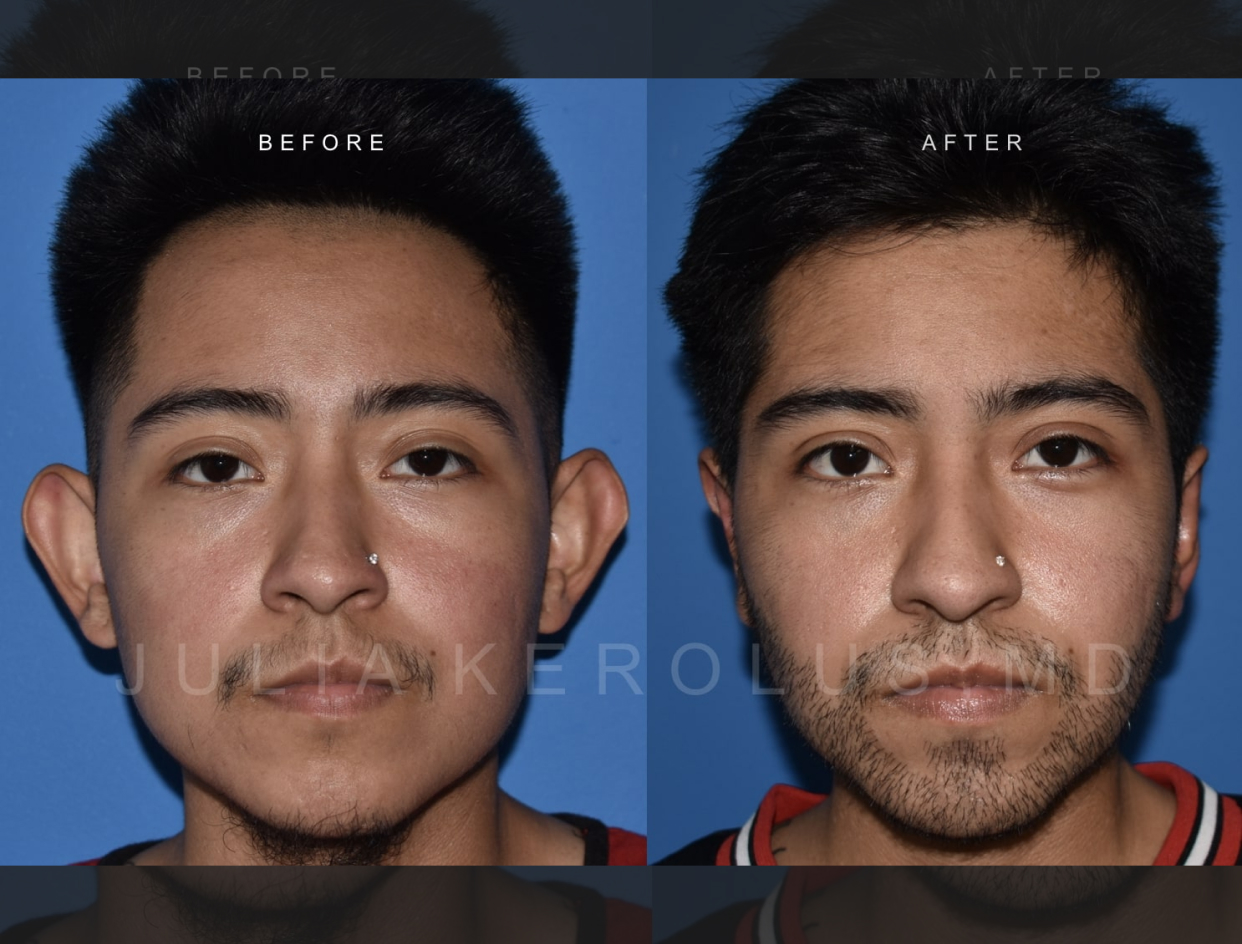
 Swipe To Next
Atlanta, GA
Prominent ears pull attention before anything else on your face. Kids feel it at school. Adults feel it in photos and meetings. Otoplasty—ear reshaping or ear pinning—is a straightforward ear surgery that sets the ears closer to the head and refines the outer ear so your features read as balanced.
At Kerolus Facial Plastic Surgery in Atlanta, Dr. Julia Kerolus (double board certified in facial plastic and reconstructive surgery) treats otoplasty like the rest of her facial plastic surgery procedures: precise, proportion-driven, and personal. The goal is a natural appearance that fits your face, not a template.
Swipe To Next
Shape That Fits Your Face
Cosmetic ear surgery reshapes the ear cartilage so the ear sits in a more balanced new position. The otoplasty procedure builds or sharpens natural folds (often the antihelical fold), reduces excess cartilage in the conchal bowl when it pushes the ear outward, and secures the form with internal sutures.
The work is structural and external; the ear canal and the patient’s hearing are not affected. For children and adults with protruding ears or asymmetry, otoplasty surgery solves the thing that makes them feel self-conscious, without changing the rest of their facial features.
You’ll hear different terms: ear reshaping, ear shaping surgery, cosmetic procedure, reconstructive surgery. Functionally, the technique is similar. We adjust the ear structure so it matches the face instead of fighting it.
Real Symmetry
Two groups show up most: children and adults who are tired of working around their ears. Kids often come in around adult size (about ages 5–6), when the cartilage takes shape predictably, and results are steady. Adults come in after years of hiding under hair or hats. A good candidate understands the surgery, has realistic expectations, and has support at home for week one. If one ear projects more than the other, if the lower ear looks wide from the front, or if the ears dominate otherwise balanced other features, otoplasty can help.
Clear Plan
Expect measurement, clear language, and a plan that respects your anatomy. Dr. Kerolus evaluates the angle of projection, fold depth, conchal size, and how the ear meets the head. She explains what creates prominent ears in your case and what can be safely changed. For children, we talk through timing, home care, and how to keep the first week simple. For adults, we cover your priorities: tighter profile? Equal projection? Subtle reduction at the rim? You’ll see where the incision sits and how scars are easily hidden in the back crease.
Asleep or Relaxed. Your Choice.
This is an outpatient procedure in an accredited Atlanta facility. Kids often have general anesthesia, so they sleep comfortably. Many adult patients do well with local anesthesia and light sedation. Some choose local or general anesthesia based on comfort and scope. The operation takes about two hours, depending on the asymmetry and the moves needed. Then you go home the same day with a wrap and clear instructions.
Cartilage Coached Into Place
Incisions are placed behind the ear in a natural crease. Through that access, Dr. Kerolus reshapes the cartilage to create stronger natural folds, trims excess cartilage if the concha is large, and brings the ears closer using internal sutures that hold the new shape without pulling the skin tight. The repair aims for strength with restraint, so the ear looks like your ear—just in the right place. Closure is meticulous to reduce visible scars. The skin carries minimal tension, which supports clean healing.
Patients often ask if this is a minimally invasive procedure. The short answer: it’s focused, efficient surgery with small incisions and thoughtful surgical techniques. Less drama, more control.
Elevate, Chill, Heal
Most patients call otoplasty recovery manageable. Expect a headwrap the first week, then a soft headband at night for several more weeks to protect the repair. Keep your head elevated while resting for the first few days. Pain medication helps with soreness and pressure early on. Swelling fades over one to two weeks; bruising, if present, follows the same curve. Plan for two weeks away from contact risk. Desk work and normal activities often resume after about two hours of bandage removal at the first post-op visit (kidding—plan on a few days, then ease back in).
Here’s the honest rhythm most patients feel: day 1–3, swollen and snug; day 4–7, curious and optimistic; day 8–14, presentable, still cautious. The healing process continues for months as cartilage adapts. Ears soften into their new position, and the incision line settles. Results are generally permanent when the fold is built correctly and early protection instructions are followed.
Subtle Shift, Major Ease
A successful otoplasty shifts how you’re read in a split second. That’s the point. From the front, the ear no longer has “wings.” From the side, the profile line is cleaner and your face—not your ears—leads. Haircuts open up. Gym, pool, and daily life feel simpler. For kids, self-talk improves. For adults, self-esteem often catches up with the rest of their lives. The ears look natural because the new shape mirrors the natural folds that were missing, not a flat pin to the skull.
Access Meets Precision
Otoplasty costs vary depending on age, anesthesia, asymmetry, and complexity. Your quote includes the surgeon’s fee, anesthesia, and facility fees, plus standard follow-up. Purely cosmetic otoplasty is usually self-pay. If the plan is part of reconstructive surgery after trauma or to correct a significant congenital issue, insurance may enter the conversation; we’ll outline documentation requirements. We serve families and patients seeking otoplasty from across Atlanta, GA, and nearby, including Sandy Springs. You’ll see numbers clearly before you schedule.
Get balanced
This is a facial-only practice. That matters when you’re asking someone to reshape cartilage in the most exposed place on your head. Dr. Kerolus is double board-certified in facial plastic and reconstructive surgery, which brings deep experience with facial plastic anatomy and scar placement. You meet with the surgeon, get a plan that fits your ear and your life, and you’re followed closely after surgery—with answers when you need them.
Most Atlanta otoplasty patients report soreness or pressure for a few days. Oral pain medication and head elevation help. Kids bounce back fast; adults do well with clear instructions.
Following an otoplasty Atlanta patients can expect bandages for about a week, followed by wearing a headband at night for continued support during healing. Back to normal activities in about a week, no contact risk for a few weeks. Full settling takes time, but daily life resumes quickly.
The incision sits behind the ear in a crease, so scars are easily hidden. Good sun care and time help them fade.
No. The work is on the outer ear cartilage. The ear canal and the patient’s hearing aren’t involved.
Children often benefit once their ears reach near adult size and school becomes social. Adults see excellent otoplasty outcomes too, with the technique adjusted for firmer cartilage.
With stable cartilage repair and protection during early healing, results hold for the long term.
Schedule a Consultation
Taking care of yourself is about more than just annual check-ups and eating right. You also want to preserve your ability to look and feel your best. If you feel like you have an area that you want to improve through plastic surgery, schedule a consultation with Dr. Kerolus. She will make sure you find the right treatment for your best results.
1218 West Paces Ferry Road Northwest, Suite 108, Atlanta, GA 30327
Mon-Thurs: 9am - 5pm
Fri: 9am - 1pm

