Atlanta, GA
People often notice specific things about their nose. They might see how a bump looks from certain angles, how the tip of their nose moves when they smile, or which side feels blocked. Most people who look into rhinoplasty in Atlanta have been thinking about it for years. They want clear information about what can change, what recovery is like, and how their nose will look in balance with their face.
At Kerolus Facial Plastic Surgery, Dr. Julia Kerolus designs each rhinoplasty with structure, breathing, and balance in mind. She works only on the face and neck and is double board certified in facial plastic and reconstructive surgery as well as otolaryngology-head and neck surgery. Each plan starts with your anatomy, goals, and medical history, including any injuries or past surgeries.
Rhinoplasty is surgery to change the shape, size, support, or function of your nose. Also known as nose reshaping surgery or a nose job, it can help with appearance, breathing, or both, while keeping your nose in balance with your other facial features.
Rhinoplasty can refine the bridge, tip, nostrils, width, or how far the nose sticks out. Functional changes can fix a deviated septum, support the nasal valves, or clear blockages from injuries. The exact steps depend on what Dr. Kerolus finds during your evaluation.
People think about nose surgery for one specific issue or a few related concerns. A good plan targets the features that are causing the problem.
Cosmetic rhinoplasty may address:
Functional rhinoplasty may address a deviated septum, narrow nasal valves, structural collapse, or other causes of difficulty breathing. Cosmetic and functional concerns can be treated together when the anatomy allows.
The shape of your nose and your airway are connected. Changes for appearance can affect breathing, and fixing breathing issues can change how your nose looks. Careful planning considers both from the beginning.
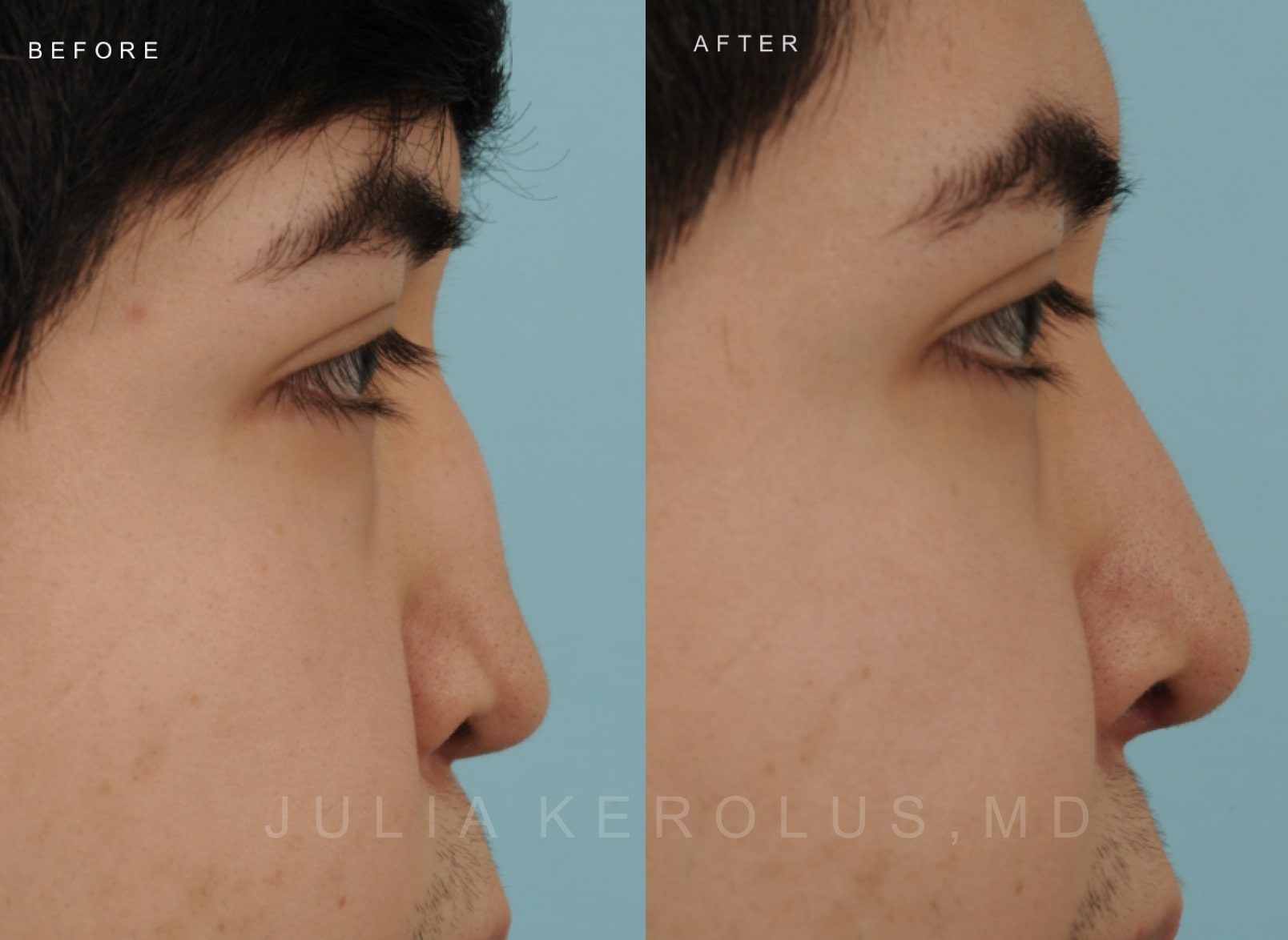
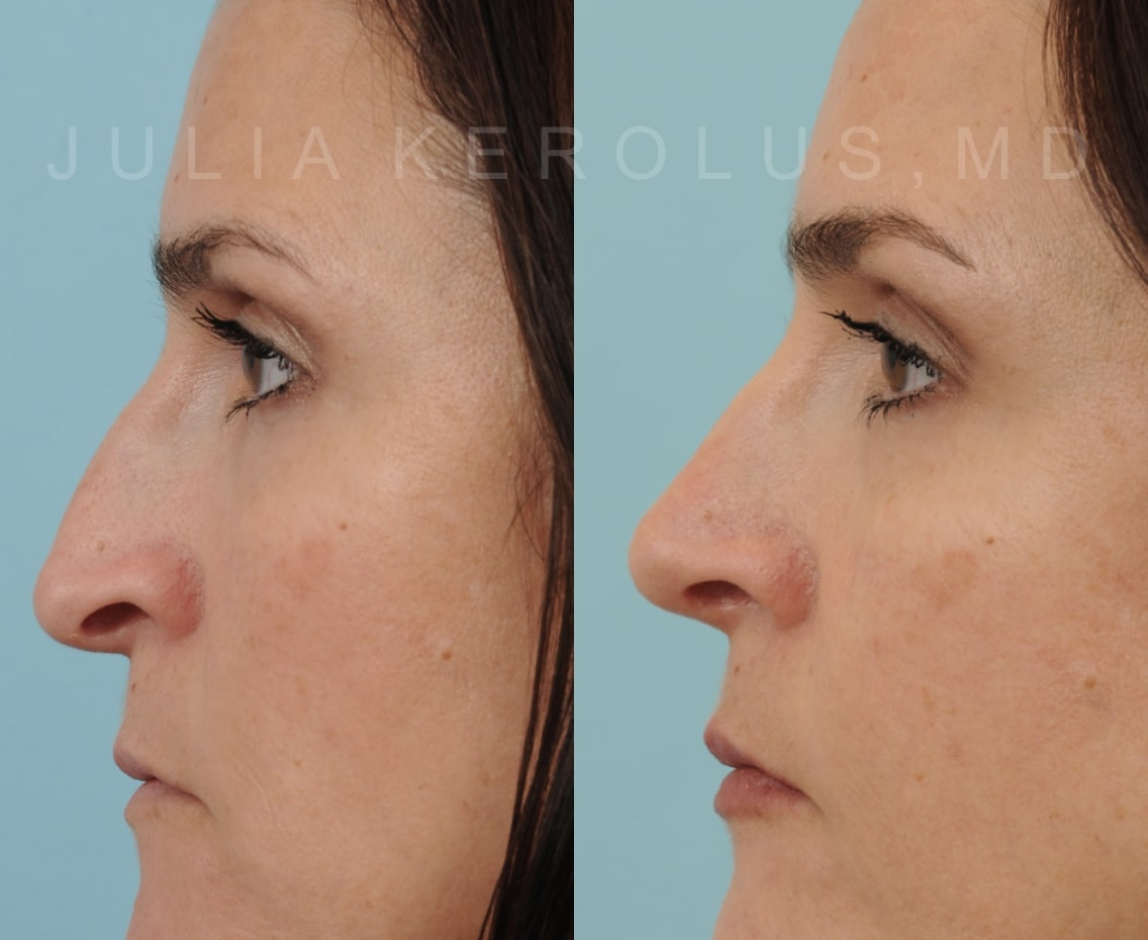
Cosmetic rhinoplasty can smooth the bridge, straighten your profile, support the tip, or reduce how much the nostrils show. Dr. Kerolus looks at how these changes fit with your chin, cheeks, eyes, lips, and forehead. Other facial features can also affect how noticeable your nose looks.
Functional work focuses on airflow and structural support. A deviated septum can narrow one or both sides of the airway. Weak nasal valves may collapse during exercise or deep breathing. Trauma and previous surgery can create a combination of obstruction, asymmetry, and missing support.
As a facial plastic and reconstructive surgeon, Dr. Kerolus evaluates the septum, nasal valves, turbinates, cartilage, and bony framework as needed. Functional improvements depend on the source of the blockage, and no operation can promise perfect breathing.
Your bone, cartilage, skin thickness, support, and how scars heal all affect what changes are possible. Thick skin can make the tip look softer and hold swelling longer. Thin skin can show small changes more clearly. Weak cartilage might need extra support with grafts.
The initial consultation includes an examination from several angles and an internal airway assessment when breathing is a concern. Dr. Kerolus considers facial proportions, asymmetry, and movement. Photos document the starting point. Computer imaging may support the discussion, though it cannot guarantee an exact result.
During your evaluation, Dr. Kerolus will explain the tradeoffs. Lowering the bridge can change how far the tip sticks out. Making the nasal bones narrower can affect breathing. Rotating the tip can change how much of the nostrils you see.
The conversation starts with the change you want and the reason you want it. Bring a list of breathing symptoms, prior injuries, allergy treatment, and details from any previous surgery. Reference images may clarify a preference, though another person’s nose cannot be copied onto different bone, cartilage, and skin.
Dr. Kerolus examines the bridge, nasal tip, nostrils, septum, and airway. She watches the nose during breathing and looks at the face from the front, profile, and angled views. The examination helps separate cosmetic concerns from functional issues and shows where one adjustment could influence another.
This is the time to talk about what matters most to you. You might want to fix a crooked bridge but keep a strong profile, or refine the tip while keeping family features. Being specific helps Dr. Kerolus understand your goals better than just asking for a smaller or perfect nose.
The visit should end with a proposed rhinoplasty procedure, the access method, possible graft sources, recovery expectations, and limitations. Ask what Dr. Kerolus would leave unchanged and why. An experienced facial plastic surgeon should be able to explain the plan in everyday language and tell you when an idea could weaken support or compromise breathing.
You do not have to decide about surgery at your first visit. Take time at home to review the recommendations, costs, and what recovery will involve. Getting a second opinion can help if you are unsure or if different doctors suggest different plans.
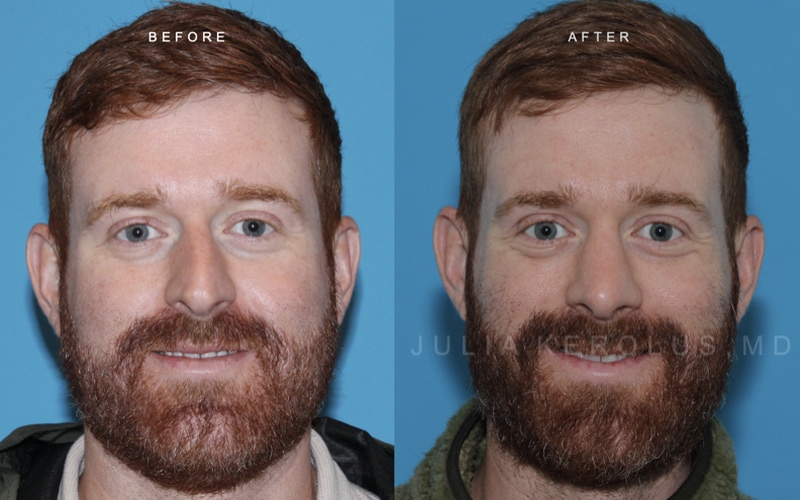
Benefits depend on the original anatomy and goals. Success may mean a straighter bridge in photos, easier breathing during exercise, or both.
Potential benefits include:
Rhinoplasty results take time to show. Early swelling can hide details, especially around the tip, so it is best to wait until the tissues settle before judging the outcome.
Good candidates are healthy, have finished growing, do not smoke or can quit as needed, and have realistic expectations. People of many ages consider rhinoplasty, but being ready is more important than age.
Rhinoplasty may suit someone bothered by a dorsal hump, crooked nose, wide bridge, poorly supported tip, nostril asymmetry, or post-traumatic changes. Difficulty breathing caused by a correctable structural problem may also qualify. Revision candidates need stable tissue and enough healing time before another operation.
If you use nicotine, have uncontrolled health problems, unrealistic expectations, or have not finished growing, surgery may not be safe or may need to wait. Nasal inflammation, recent injury, or healing from another procedure can also mean waiting. Dr. Kerolus may suggest medical treatment, more time, seeing another specialist, or not having surgery if that is best for you.
Open and closed rhinoplasty describe surgical access. Dr. Kerolus chooses according to the planned changes, support framework, and visibility required.
Open rhinoplasty uses incisions inside the nostrils plus a short incision across the columella. Lifting the skin provides a direct view of the nasal anatomy for detailed tip work, major asymmetry, complex grafting, trauma, and revision cases.
The external incision creates a small scar that usually fades as it matures. Healing varies, and tip swelling may last longer after extensive structural work.
Closed rhinoplasty keeps incisions inside the nostrils and avoids a columellar scar. It provides a limited view, so the planned changes must be achievable through internal access.
There is no single best approach for everyone. The right method gives the surgeon enough control to do the planned work while avoiding unnecessary changes.
Noses differ by family, background, and gender. Planning takes into account which features you want to keep while making sure your nose stays well supported.
Skin thickness, bridge height, tip support, nostril shape, and cartilage strength can mean you need extra support, preservation, grafts, or careful reduction. Dr. Kerolus talks with you about the changes you want without making assumptions based on ethnicity. You decide which features are important to you and which you want to change.
Revision rhinoplasty addresses cosmetic or functional problems after previous surgery. Scar tissue, altered cartilage, and missing support increase complexity. Grafts may come from the remaining septum, ear, or rib when more structure is needed.
Dr. Kerolus will give you preparation instructions based on your health history and surgical plan.
Kerolus rhinoplasty surgery is an outpatient procedure performed in an accredited surgery center or hospital. General anesthesia is administered by a board-certified anesthesiologist. Steps vary by anatomy.
How long surgery takes depends on how complex it is. Revision surgeries and combined cosmetic and reconstructive procedures usually take longer than a first-time, limited rhinoplasty.
During the first week, it is common to have congestion, pressure, swelling, and bruising around your eyes. Medication usually controls pain, but feeling blocked up is often the most bothersome.
Keep the head elevated, use cold compresses as directed, and protect the splint. Avoid bending, straining, nose blowing, and bumps. The external splint is commonly removed around one week.
Many people return to desk work and normal public activities within one to two weeks. Light activity resumes according to instructions, while strenuous exercise and contact risks stay restricted longer. Glasses may need support if they rest on healing nasal bones.
The bridge of your nose settles before the tip does. Swelling can look uneven for a while. If you have thick skin, revision surgery, or a lot of tip work, recovery may take longer. Final results usually appear over six to twelve months, and sometimes it takes even longer.
Follow-up visits allow Dr. Kerolus to monitor healing. Call the practice for increasing pain, heavy bleeding, fever, sudden swelling, vision changes, breathing distress, or unexpected symptoms.
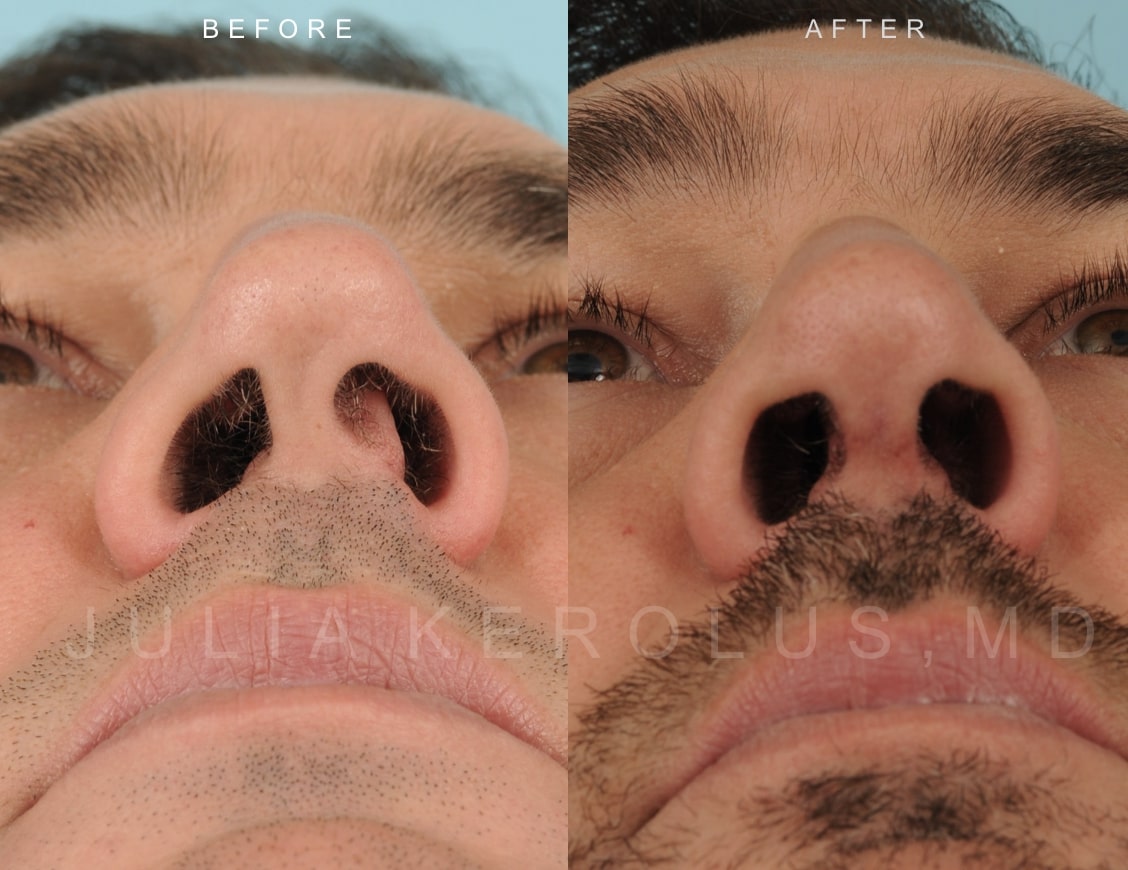
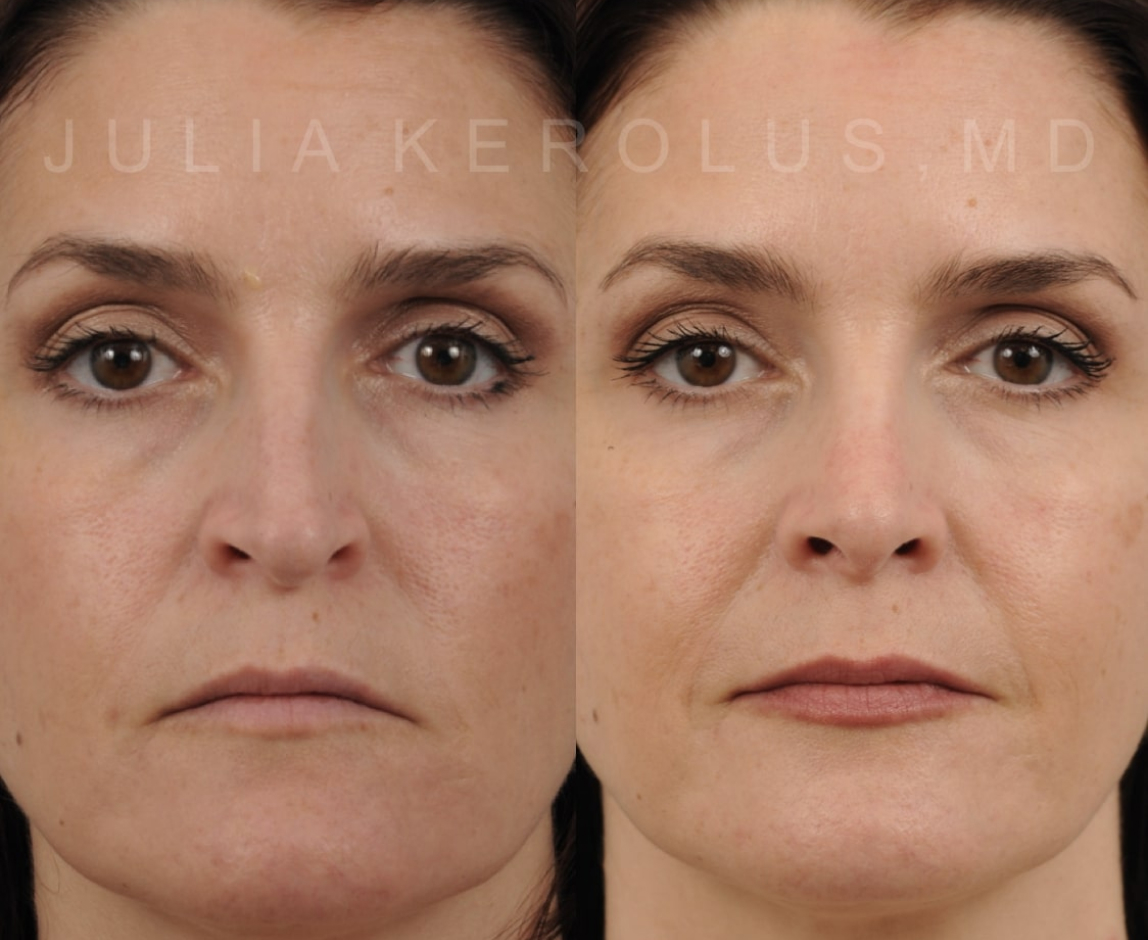
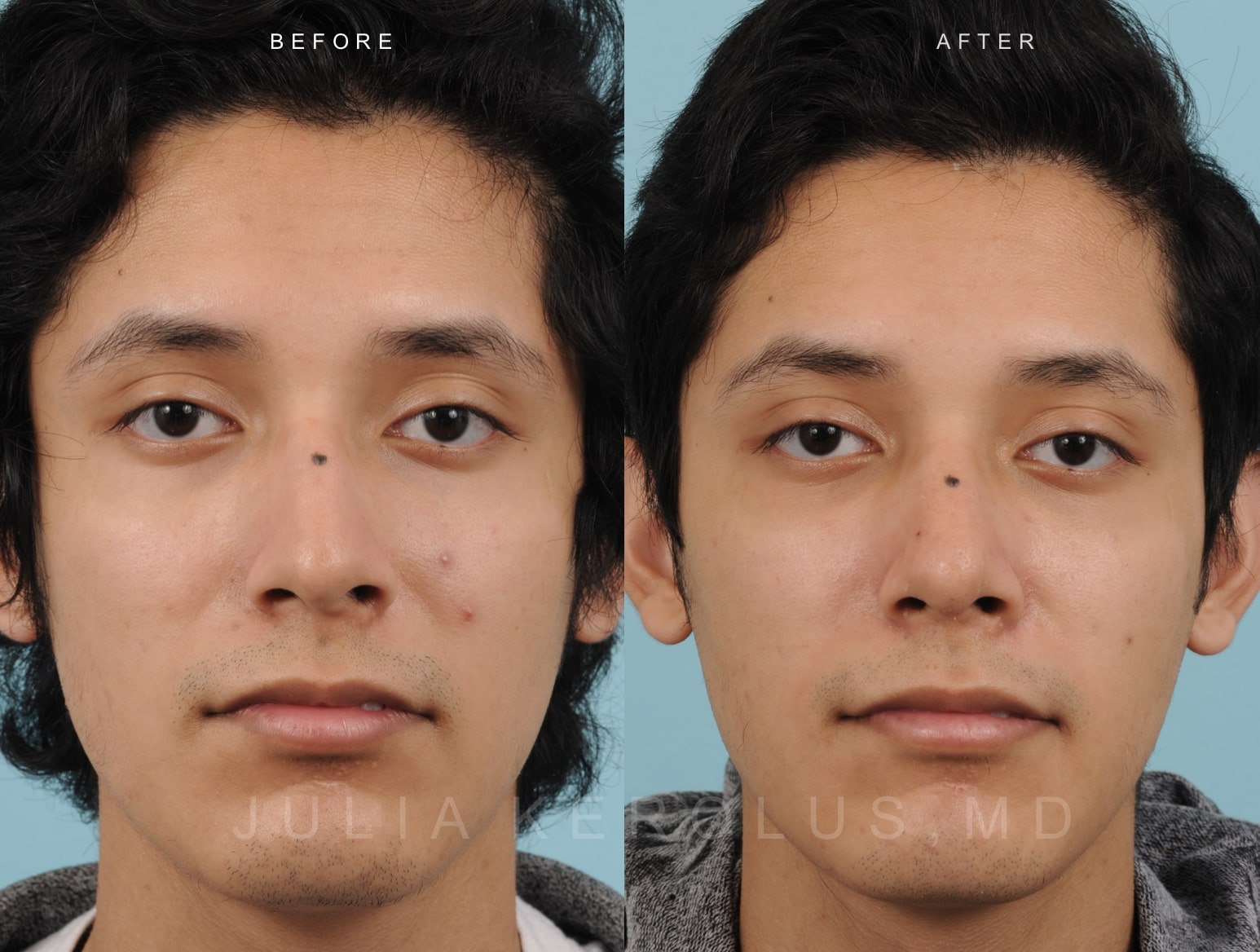
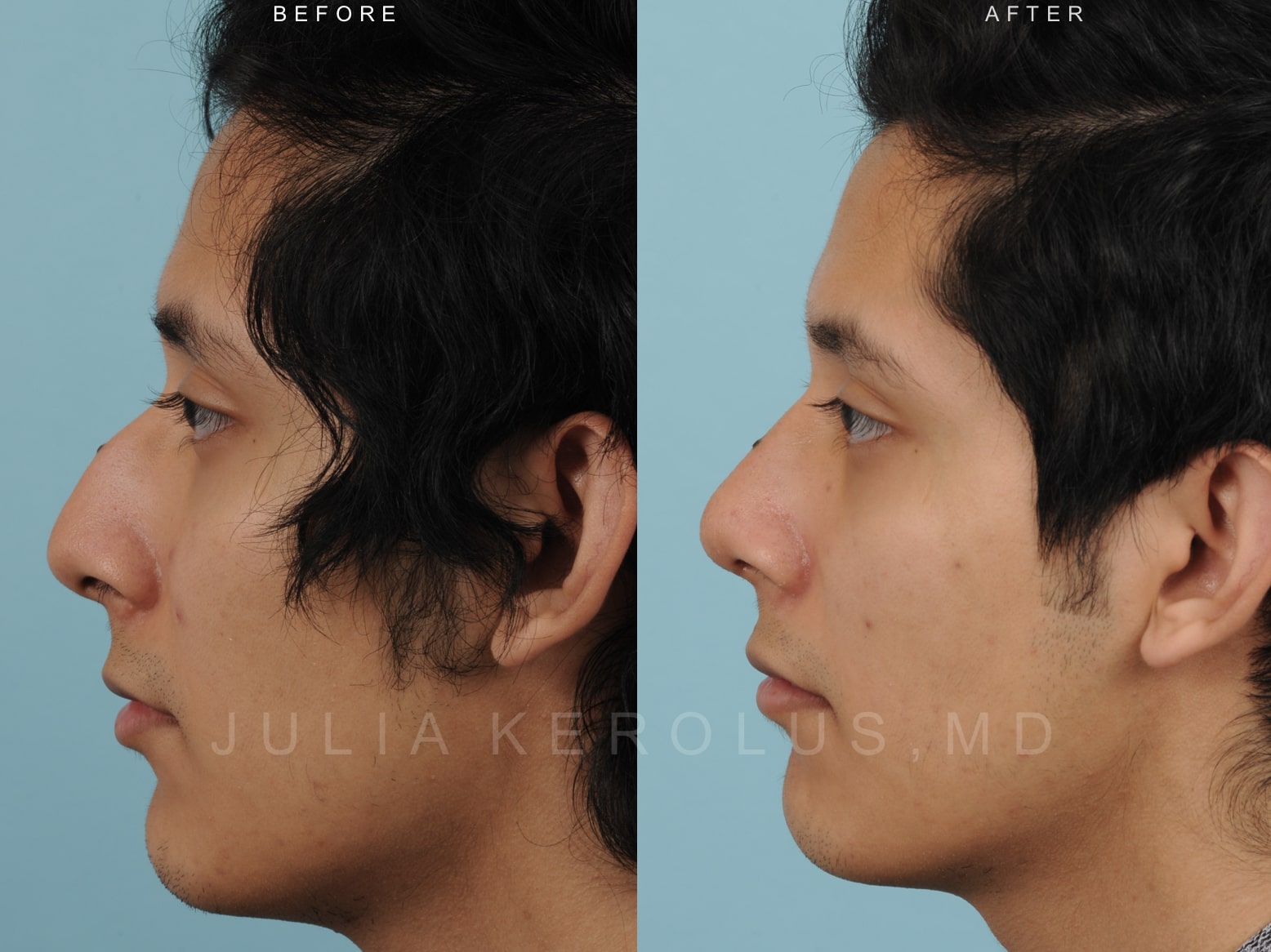
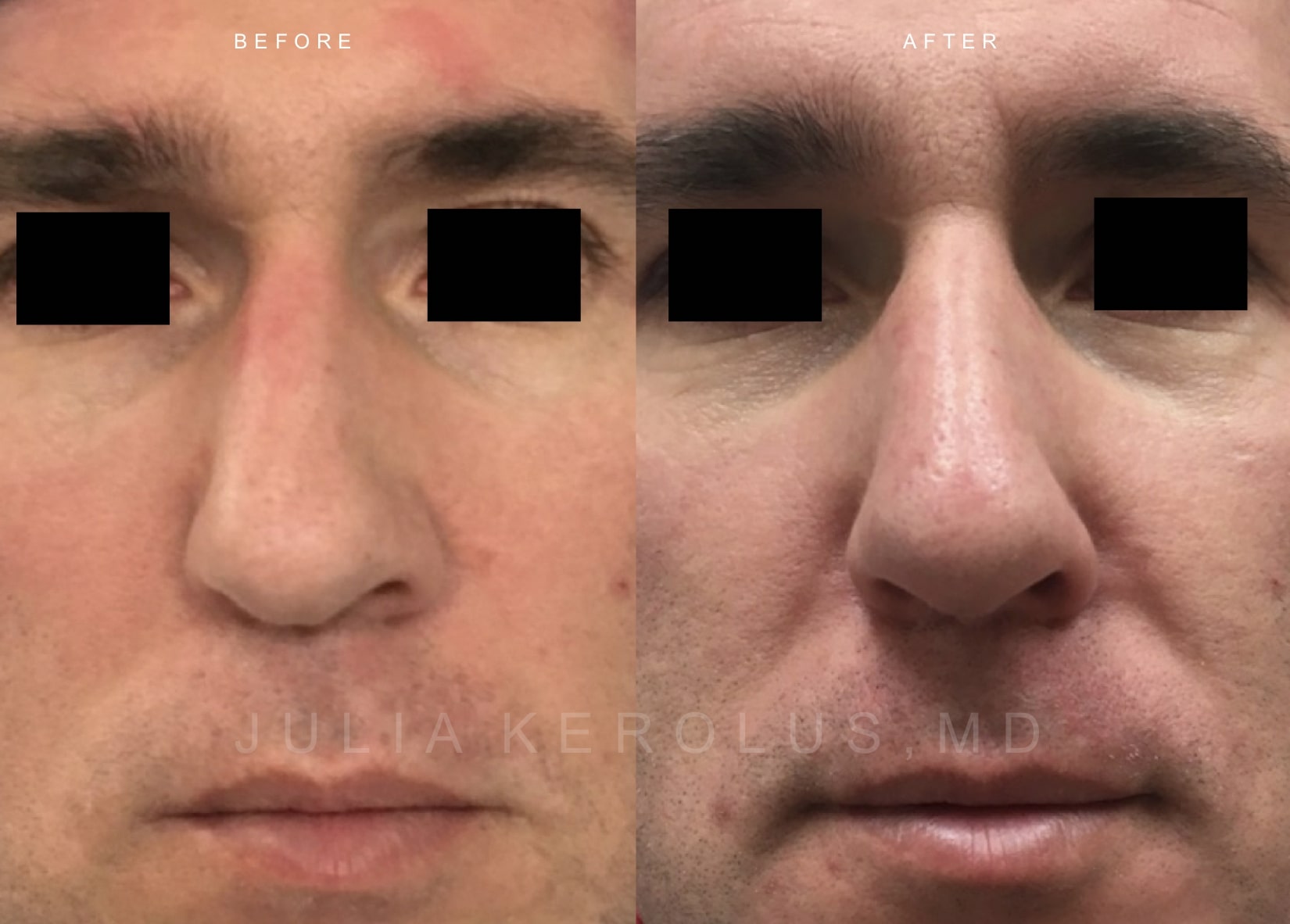
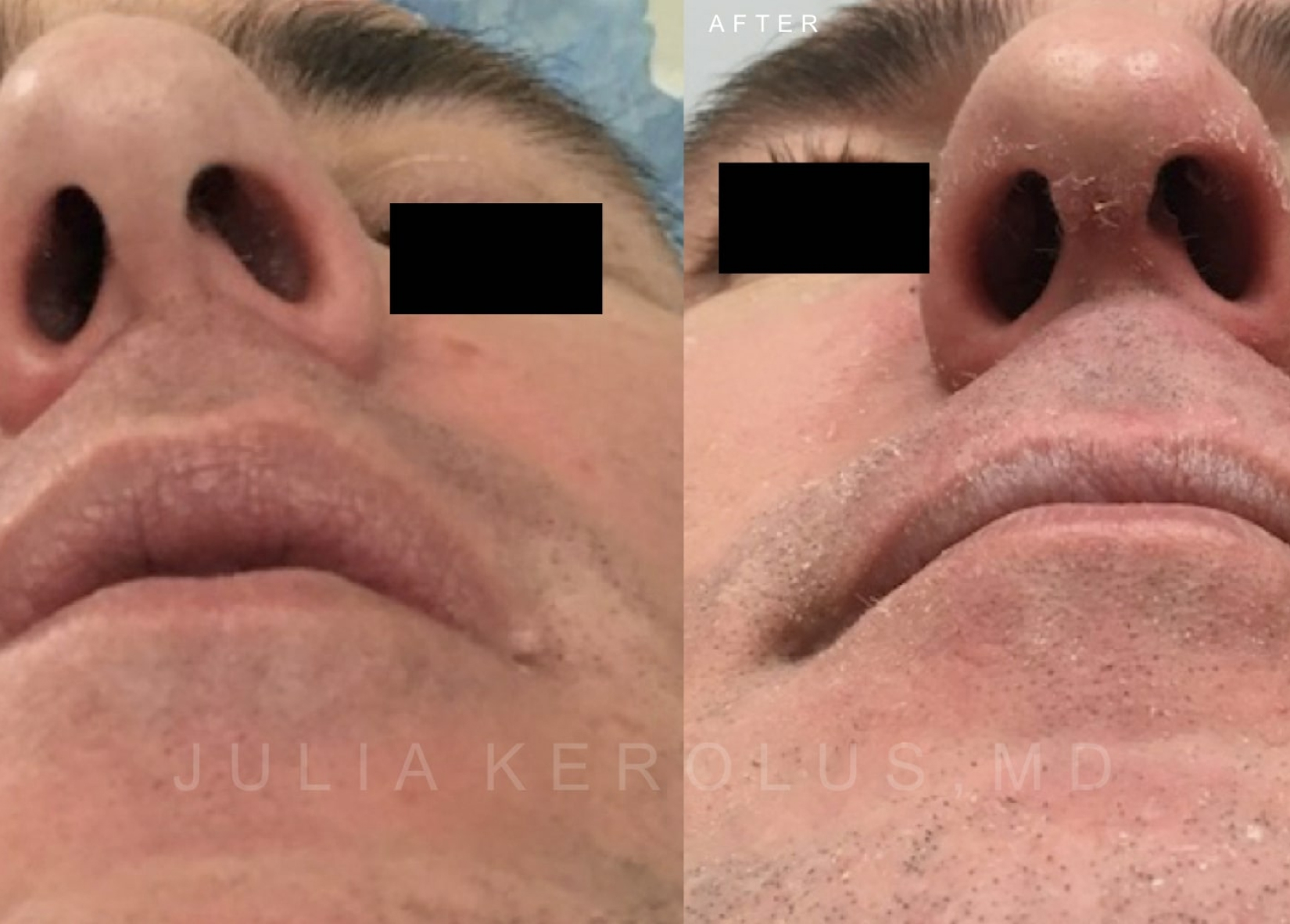
The nose looks different when the splint comes off, though early swelling hides detail. The bridge settles over the following weeks. Tip definition arrives more slowly.
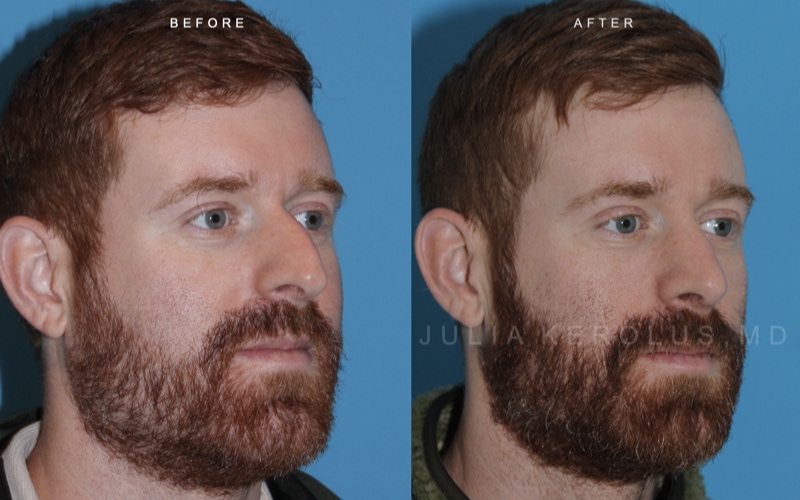
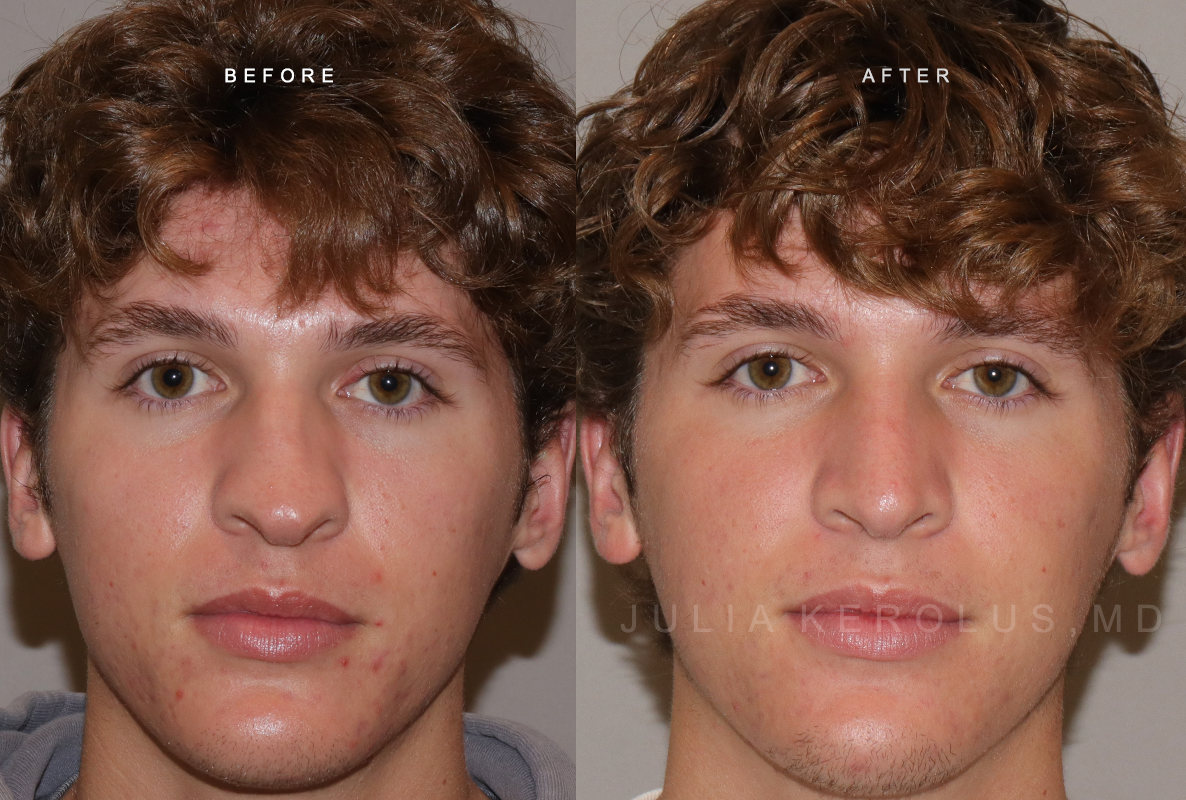
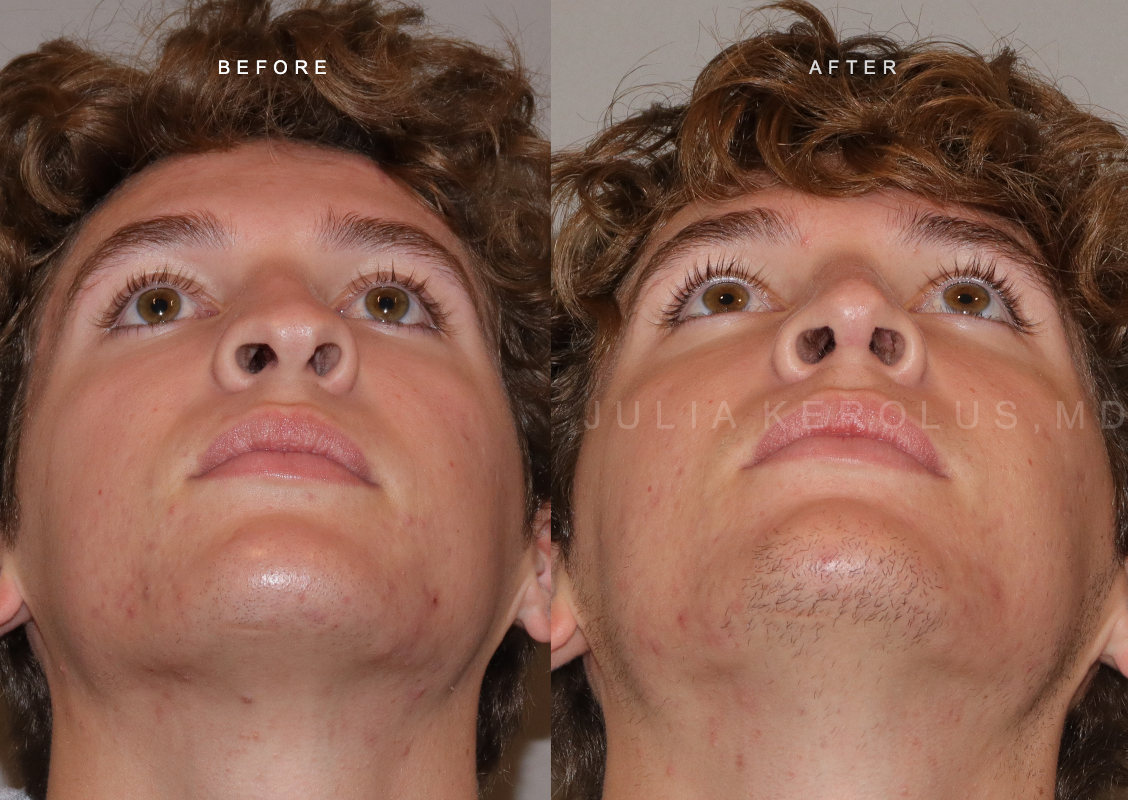
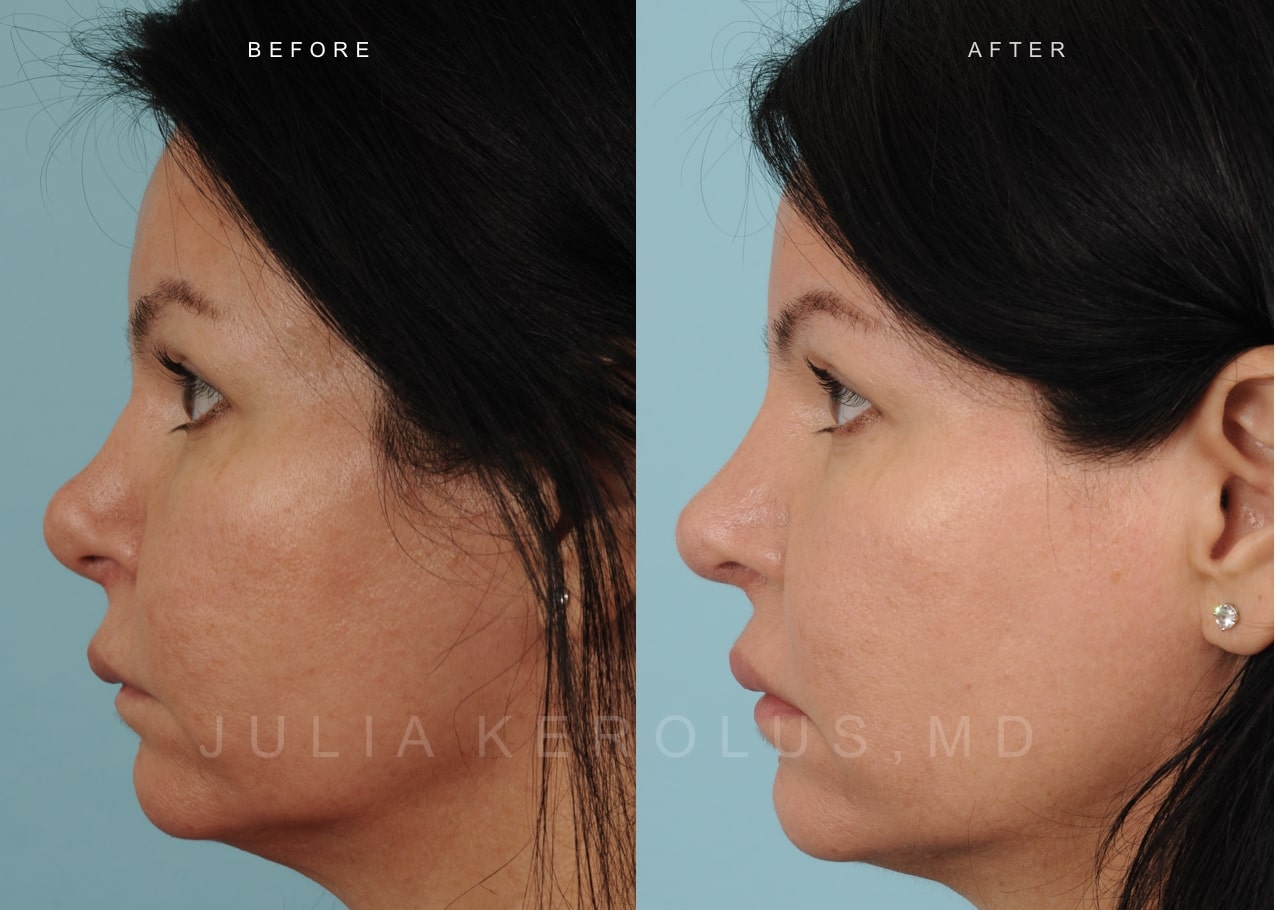
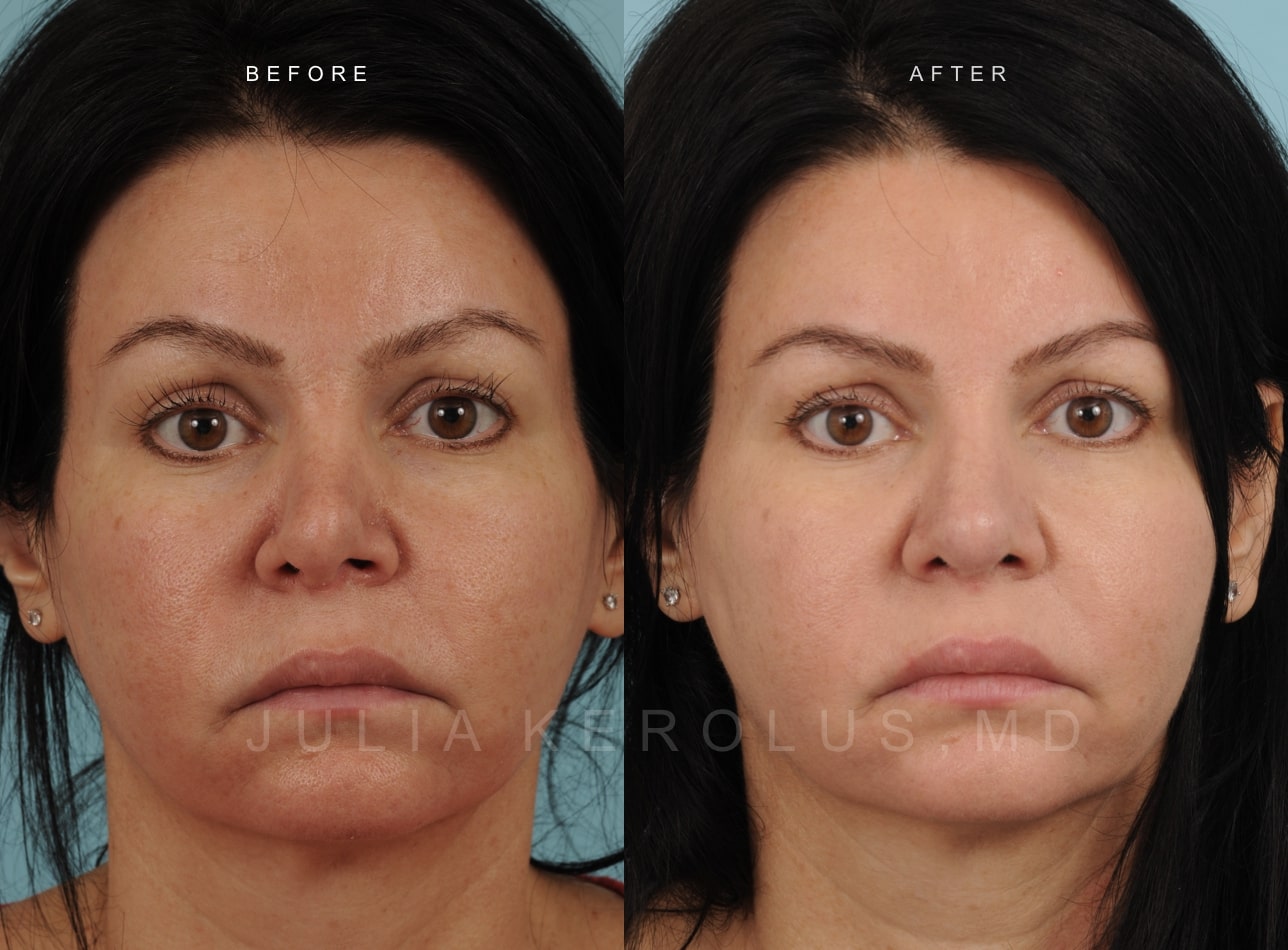
Balanced results help your face look harmonious. A smoother profile, straighter front view, or more defined tip should fit well with your chin, lips, cheeks, and eyes. Perfect symmetry is not possible.
Structural changes are intended to last, though the nose still changes with age, skin quality, injury, and health. Stable support helps preserve a natural appearance.
Closed rhinoplasty keeps incisions inside the nostrils. Open rhinoplasty leaves a short scar between them. Its final appearance depends on skin, tension, aftercare, and healing.
Internal scar tissue can also affect recovery, especially if you have had surgery before. Revision cases may feel firm or stay swollen longer. Protecting your skin from the sun and caring for your incisions help scars heal well.
Every surgical procedure carries risk. Possible complications of rhinoplasty include bleeding, infection, anesthesia reactions, prolonged swelling, numbness, scarring, asymmetry, contour irregularities, skin-healing problems, septal perforation, persistent difficulty breathing, or an outcome that leads someone to consider revision surgery.
Careful screening, having surgery in an accredited facility, working with a board-certified anesthesiologist, and understanding nasal anatomy all help lower risks. However, no surgery is completely without risk. Your consultation will cover the risks that apply to your plan.
The cost of rhinoplasty in Atlanta depends on what needs to be done. A simple cosmetic change, a complex crooked nose, and revision surgery all take different amounts of time. Fees may cover the surgeon, anesthesia, facility, tests, and follow-up care.
Insurance may help with functional work if it meets medical guidelines. Cosmetic rhinoplasty is usually paid out of pocket. Be sure to check your coverage, deductibles, and exclusions before surgery. The Atlanta office will give you a personalized quote after your consultation.
Several procedures can change the nose or its relationship to the face.
| Option | Best Suited For | Main Limitation |
|---|---|---|
| Cosmetic rhinoplasty | Lasting structural reshaping of the bridge, tip, or nostrils | Requires surgery and a long refinement period |
| Septoplasty | A deviated septum causing nasal obstruction | Does not routinely address every external cosmetic concern |
| Functional rhinoplasty | Airway problems involving septum, valves, or structural support | Improvement depends on the source of obstruction |
| Nonsurgical rhinoplasty | Temporary camouflage of selected contour depressions or asymmetry | Adds volume, cannot make the nose smaller, and carries injectable risks |
| Revision rhinoplasty | Persistent concerns after a previous operation | Scar tissue and limited graft material increase complexity |
A nonsurgical nose job uses filler to camouflage selected contours. It cannot narrow bones, reduce a large tip, remove a hump, or correct a deviated septum. Nasal filler carries serious vascular risk and requires an experienced medical injector.
Rhinoplasty can be performed with other facial procedures when the combination is medically appropriate. A chin implant or chin contouring may improve profile balance when limited chin projection makes the nose appear larger. Eyelid surgery or a brow lift may address separate upper-face concerns. Neck surgery can refine the jawline and neck in someone seeking broader facial surgery.
Julia L. Kerolus, MD, FACS, is double board certified by the American Board of Facial Plastic and Reconstructive Surgery and the American Board of Otolaryngology-Head and Neck Surgery. Her advanced training includes a five-year head and neck surgery residency and a facial plastic surgery fellowship. She limits her practice to the face and neck.
That education supports cosmetic and reconstructive procedures. Dr. Kerolus evaluates appearance, airway function, trauma, facial proportions, and the effects of previous surgery together. Her reconstructive work also informs revision planning.
Dr. Kerolus is involved from your first consultation through your follow-up visits and gives you direct access for questions. She explains tradeoffs clearly and may suggest other options if your expectations do not match what rhinoplasty can achieve.
In Atlanta
Meet with Dr. Julia Kerolus at her Atlanta office on West Paces Ferry Road to review the anatomy, choices, and limits of surgery and receive a personalized treatment plan.
Most people feel congestion, pressure, and tenderness instead of severe pain. Medication helps with discomfort in the first few days. Your experience will depend on how much bone, cartilage, septum, and graft work is done.
Rhinoplasty can straighten the nasal bones and cartilage and may fix a deviated septum at the same time. If you have had asymmetry for a long time, trauma, or facial differences, perfect straightness may not be possible. Be sure to talk about what results you can expect during your consultation.
Insurance does not usually cover cosmetic rhinoplasty. It may consider medically necessary functional work for documented obstruction, trauma, or deformity. Approval depends on the individual plan, medical findings, and required documentation.
Most people take one to two weeks off from in-person work. How long you need depends on bruising, swelling, your job, and how comfortable you feel being seen while healing. If your job is physically demanding, you may need more time off.
You should be done growing before having cosmetic rhinoplasty. Being ready also means being emotionally mature, having clear goals, and being able to follow recovery instructions. Teens need to have a personalized discussion with a parent or guardian before surgery.
It can when a structural problem such as a deviated septum, weak nasal valve, or traumatic deformity causes obstruction. A thorough internal and external examination determines which functional issues may respond to surgery.
The changes from rhinoplasty are meant to last for many years. However, aging, injuries, skin changes, and health issues can affect your nose over time. Good support and careful aftercare help keep your results looking their best.
Schedule a Consultation
Taking care of yourself is about more than just annual check-ups and eating right. You also want to preserve your ability to look and feel your best. If you feel like you have an area that you want to improve through plastic surgery, schedule a consultation with Dr. Kerolus. She will make sure you find the right treatment for your best results.
1218 West Paces Ferry Road Northwest, Suite 108, Atlanta, GA 30327